Up to 6 Weeks Free Base Rent!*
*Min Term Req’d. Other costs & fees excl. Terms apply. Select Units. Offer may change.

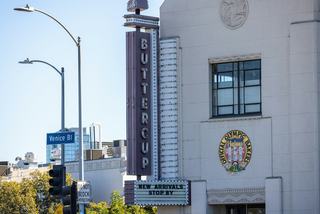
Yes. Culturally and geographically, Culver City is widely considered part of LA’s Westside.
It sits between Palms, Mar Vista, West Adams, and Playa Vista — all neighborhoods commonly grouped into the Westside region. In everyday conversation, locals absolutely include Culver City when they say “the Westside.”
No. Culver City is its own incorporated city with its own government, police department, and school district. That’s why some formal definitions separate it from Los Angeles neighborhoods — even though geographically it’s surrounded by them.
Culver City incorporated in 1917 so its founders could control local land use, infrastructure, and taxation rather than be governed by Los Angeles. Incorporation gave the new community authority over zoning, utilities, and development decisions — critical at a time when real estate growth and the emerging film industry (including what became Sony Pictures Studios) were shaping the area’s future.
People began using “Westside” as a simple directional term for neighborhoods west of the city’s historic core. It's not an official district of LA. Because it grew out of everyday speech, commuting patterns, and real estate language rather than formal planning, the label reflects geography and identity more than government lines.
Here are some communities commonly grouped into the Westside, whether they’re Los Angeles neighborhoods or independent cities:
Nope. West Los Angeles (often shortened to “West LA”) is a specific, officially recognized neighborhood within the City of Los Angeles, with defined planning boundaries near Sawtelle and Olympic.
The Westside Los Angeles, by contrast, is an informal regional nickname for the broader western portion of the metro area — and it commonly includes places that aren’t technically part of the City of Los Angeles at all, such as Culver City and Santa Monica.
The confusion happens because Westside Los Angeles emerged as a loose, catch-all label for the western part of the city, while West Los Angeles was later formalized as a specific neighborhood with defined boundaries. The areas developed at different times, without a single coordinated naming system, so the regional term and the official neighborhood name ended up overlapping — more by historical accident than clear design.
The most accurate way to describe Culver City is “Culver City on LA’s Westside,” since it is widely considered part of the Westside region but is not the West Los Angeles neighborhood and is not a neighborhood within the City of Los Angeles.
Culver City gives you a true downtown, strong creative roots, and a Westside location that doesn’t require planning your entire day around traffic. You can easily reach a great spot for dinner, grab an artisan coffee, catch the Metro E Line, or bike the Ballona Creek path. The presence of Sony Pictures Studios and nearby tech offices keeps the energy creative and employed, not just residential. For many residents, it’s that mix of walkability, job proximity, and contained scale inside the larger orbit of Los Angeles that makes it compelling.
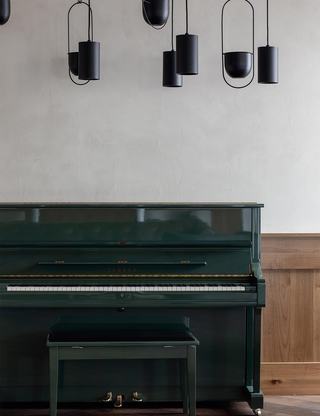
Modern new apartments at VOX bring luxe, design-forward living a to super-convenient location that's just steps from the Metro E Line. Live above Whole Foods and other neighborhood spots, while also enjoying direct rail access to Downtown LA, Culver City, and Santa Monica.
From floor-to-ceiling windows to the fitness center and rooftop pool deck, explore our curated amenities and spacious residences today.